Solargon: conservation of energy through intelligent design and utilization of super efficient building components to create very green cabins and homes.

Friday, January 13, 2012

Vintage Octagon Homes


The Zelotes Holmes House in Laurens, South Carolina, was built from 1859-1862, using the "gravel wall construction" (poured concrete) advocated in Fowler's book. The house is unusually large with each outside wall measuring 21 feet. The pink granite foundation supports the "gravel walls" of slaked lime, sand and stone, 18 " thick in the cellar and tapering to 12" at the roof. The exterior is finished in tan colored smooth stucco, scored to imitate stone. The house features 14 octagonal chimneys, three original porches and a cellar with dirt floor under the entire house.
See More
-- Photo for the Historic American Building Survey, James Boucher, 1986

Contact us for more info about an ultra efficient Solargon home, cabin or addition.
 
 
about accurate believed blogspot disclaims expressed homes house implied information living operator owner questions shared simply small solargon solargonhomes solargonhomes@gmail south spaces specifically statutory subscribe ultra update warranties website while willett write wyoming


Thursday, January 12, 2012

Stewart Solargon

The roofing for the Stewart job is now complete and the heating sytem is installed. Because of the winter weather the Stewarts will wait till spring to match the brick and stucco of the existing house.

Monday, January 9, 2012

"ODESA Criteria"


Solargon as featured in Urgent Architecture

  SIPs and Solargon use the best insulation available: high R-value, injected, rigid, closed-cell polyurethane. It serves to totally eliminate four of the six mechanisms of heat transfer (convection, air intrusion, air infiltration, and moisture accumulation), and significantly reduces the other two (conduction and radiation). Each of these is detailed in our brief article “Mechanisms of Heat Transfer.”
In the wintertime, we want to trap heat indoors and reduce heat loss.
In the summertime, we want to trap cool air and reduce heat gain.
Fortunately, insulation works both ways: to reduce heat gain, or to reduce heat loss.
In a climate such as Arizona, radiant heat from the sun is a significant factor. Radiant heat can be reduced with three methods: shading, reflection, and multiple barriers. Polyurethane has a cellular structure that provides hundreds of thousands of barriers to diminish radiant heat.
In addition, the ambient air temperature in Arizona in the summertime is quite high, day and night. Ambient heat is transferred indoors via conduction, convection, air intrusion, and air infiltration. Polyurethane, with its very high R-value, significantly reduced conduction. The closed-cell foam totally eliminates convection, air intrusion, and air infiltration.
Other forms of insulation, such as fiber-glass, cellulose, Icynene, and blue-jean material, have half the R-value, allow air-flow, and do not eliminate any of the six mechanisms of heat transfer.
Another significant factor in reducing heat transfer is the amount of area of the building that is exposed to the elements. Buildings should be designed to create the most floor-space with the least amount of building materials, thus the least wall area. A circular building is most efficient, with an “efficiency ratio” of floor area to lineal feet of walls of 8.9. However, a circular building is more difficult to build than one with flat surfaces. An octagonal building, which as an efficiency ratio of 8.7, is much easier to build. A square building is a bit less efficient, with a ratio of 7.9. Rectangular shapes become less efficient as the length and width become less congruent. For example, a rectangular building that is 10′ wide and 100′ long has an efficiency ratio of 4.5.
The Solargon is designed to meet the " Odesa Criteria"
1. Proper ORIENTATION;
2. Proper DESIGN;
3. Excellent thermal ENVELOPE;
4. Energy-efficient and right-sized SYSTEMS;
5. Appropriate use of ALTERNATIVE energy to achieve net-zero energy use.
The first four steps achieve CONSERVATION by reducing heating, cooling, and lighting loads.
The final step achieves CONVERSION by generating all the remaining energy needed on-site.
ODESA is the most cost-effective way to achieve net-zero and low-impact living.

Article by Brian Propp

See More
Thursday, January 5, 2012

Willett Solargon Finished

The Willett off-grid Solargon located in Sand Creek Park, Colorado is complete.
They have been busy this year finishing the interior of the cabin, setting up
the the solar and wind turbine systems, trenching for wiring and
waterpipes, and digging the well and septic system. See More Pictures                       


Living Room


Bedroom: Notice solar panel system and wind turbine outside the window.
Clic on Willett Solargon to see more pictures of this finished project.

Wednesday, December 28, 2011

Solargon Projects


                                         Paonia Colorado - Solargon 30 with 8' walls
Hi all,
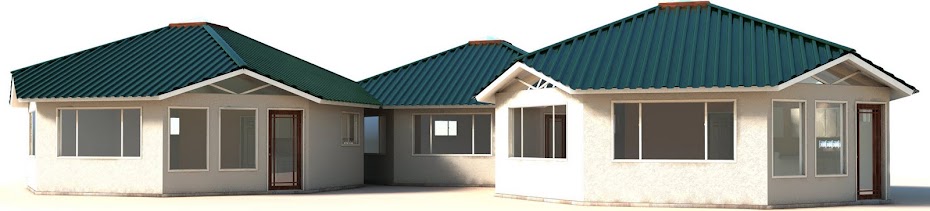
 If you have a building project in mind for 2012 now is the time to start planning. Even though Solargons go up quickly, the project start to finish, will take time. What is your floor plan? Will you want a slab on grade foundation or build on caissons? This is the time to start thinking about all that is needed to get there by summer.  This has been a an interesting year with new applications for Solargons. Our latest project was a Solargon 30 with 10' walls. The owner added a 700 sq. ft. master bedroom with walkout porch and decks with a link to the existing house. You are always finding new ways to utilize our ultra efficient octagon structures. If you have questions about your upcoming Solargon cabin, home or addition write me at solargonhomes@gmail.com

Saturday, December 10, 2011

Solargon Porch Addition

 
This walkout porch from the Solargon 30 master bedroom is a welcomed addition,
                                  with grand views of the Colorado front range and Indian Peaks.
Framing detail of the 6x10 fur beams See the web album.

Friday, December 2, 2011

Willett Project Complete

The Willett Solargon project was completed this fall and more pictures of this project are coming soon. To see pics click on this link and go to the Willett project.